
The Science Behind Perfectly Poached Eggs: Timing and Temperature Explained
Understanding the Basics of Poaching Eggs
Poaching eggs might seem like a simple task, but achieving the perfect poach requires a bit of culinary science. At its core, poaching is a method of cooking where an egg is gently simmered in water, allowing the whites to set while keeping the yolk deliciously runny.
The Importance of Fresh Eggs
Freshness is crucial when it comes to poaching eggs. Fresh eggs have firmer whites, which hold their shape better during cooking. To test for freshness, place an egg in a bowl of water; fresh eggs will sink and lie flat on the bottom, while older eggs will float or stand upright.
The Role of Acidity
Adding a splash of vinegar to the poaching water is a common technique used to help coagulate the egg whites faster. Vinegar lowers the water's pH, causing the proteins in the egg white to denature more quickly. Use about a tablespoon of vinegar per liter of water for best results. Avoid overusing vinegar, as it can impart a sour taste if too concentrated.
Water Temperature: The Key to Success
The temperature of your poaching water is crucial. Aim for a gentle simmer, which occurs at approximately 180°F (82°C). Water that's too hot will cause the whites to become tough and the yolk to overcook, while water that's too cool won't cook the egg sufficiently.
- Tip: Use a thermometer to ensure accurate temperature control.
The Whirlpool Method
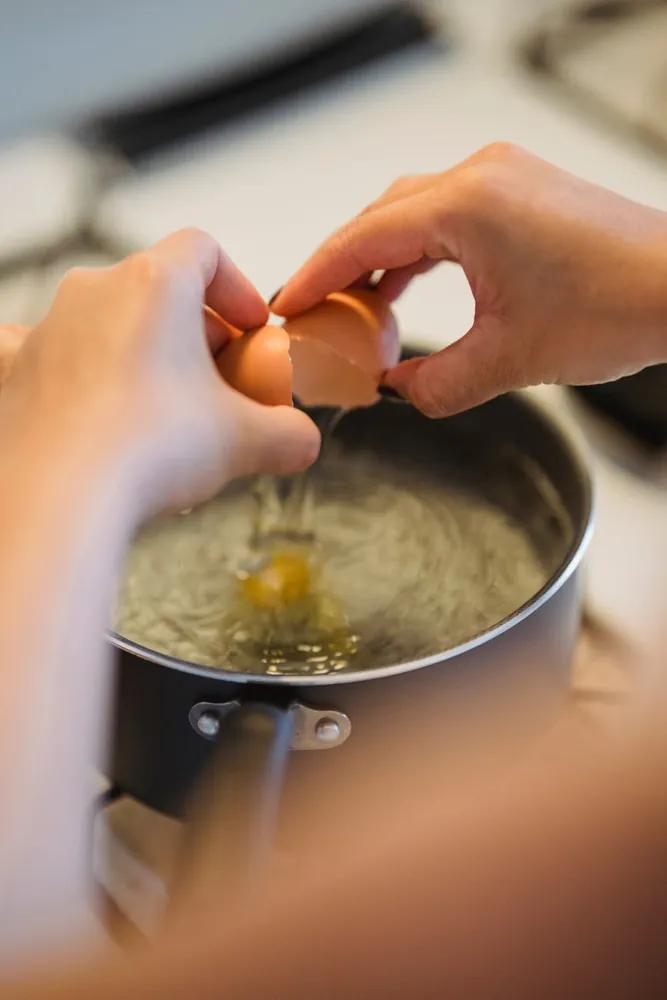
Creating a whirlpool in your simmering water before adding the egg can help the whites wrap neatly around the yolk. To do this, use a spoon to stir the water vigorously until a vortex forms, then gently drop your cracked egg into the center. This method works best with fresh eggs.
Timing Your Poached Eggs
The ideal cooking time for poached eggs is generally between 3 to 4 minutes. This timing ensures that the egg whites are fully cooked while maintaining a soft and runny yolk. Experiment within this range to find your personal preference.
- For slightly firmer yolks, extend cooking time to 4 minutes.
- If you prefer runnier yolks, aim for around 3 minutes.
Step-by-Step Poaching Process
- Prepare the Water: Fill a deep saucepan with water and add a tablespoon of vinegar. Heat until it reaches a gentle simmer.
- Create a Whirlpool: Stir the water with a spoon to create a whirlpool effect.
- Add the Egg: Crack an egg into a small bowl or ramekin, then gently slide it into the center of the whirlpool.
- Time the Cooking: Allow the egg to cook undisturbed for 3-4 minutes.
- Remove and Drain: Use a slotted spoon to lift the egg from the water and drain briefly on a paper towel before serving.
Troubleshooting Common Issues
Feathering Whites
If you notice feathering or spread out whites, it may be due to an egg that isn't fresh or too low water acidity. Ensure your eggs are fresh and consider increasing vinegar slightly if needed.
Tough Whites
Tough egg whites typically indicate that your water is too hot. Lower your stove's heat setting and ensure your water remains at a gentle simmer rather than a rolling boil.
Undercooked Yolks
If your yolks aren't cooked to your liking, try increasing the cooking time in small increments until you achieve the desired consistency. Be aware that yolks will continue to cook slightly after being removed from the water due to residual heat.
Perfect Poached Eggs: Serving Suggestions
Poached eggs are incredibly versatile. Serve them on toast with smashed avocado, atop salads for added protein, or as part of an indulgent brunch dish such as Eggs Benedict. Consider seasoning with salt and freshly cracked pepper or garnishing with fresh herbs like chives or dill for added flavor.
Conclusion
The art of poaching eggs may take some practice, but understanding the science behind timing and temperature can greatly improve your success rate. With these insights and techniques, you're well on your way to mastering perfectly poached eggs every time.